Specialties › Knee
Kneereplacement.
When arthritis no longer lets you walk without pain, a joint replacement can give you your movement back. Planned for you, also with robotic assistance.
Reviewed by Dr. Jhon Galvis Bermúdez · Orthopedic surgeon, fellowship in hip and pelvis (UNAM) · Updated October 2026
What is a knee replacement?
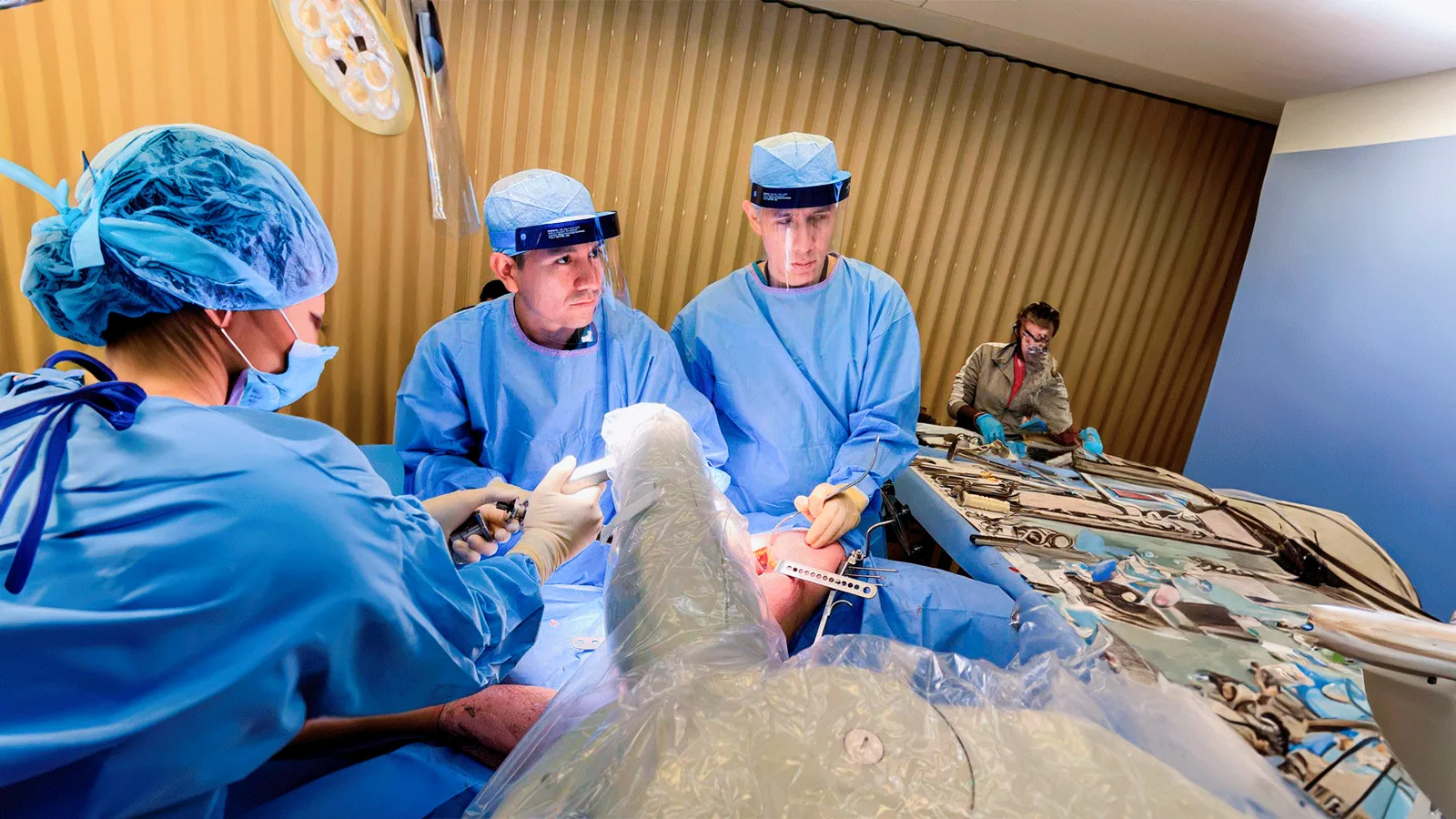
It's a surgery that removes the damaged part of the joint and replaces it with artificial components. Its technical name is total knee arthroplasty.
The most common cause is severe osteoarthritis, which causes constant pain, deformity and trouble moving. It may also be recommended for rheumatoid arthritis or after injuries.
When to consider it
Pain when walking
Or climbing stairs, even at rest or at night.
Morning stiffness
Swelling and difficulty bending or straightening the leg.
Deformity
Knees that bow inward or outward.
No improvement
With medication, physical therapy or injections.
Your process
Step by step, no surprises.
Evaluation
Visit, physical exam and review of your imaging studies.
Planning
Implant selection. With the robot, on a 3D model of your knee.
Surgery
At a specialty hospital, with your insurance or as a private patient.
Rehabilitation
Therapy and close follow-up until you're discharged.

Recovery
Moving early is part of the treatment.
Every patient progresses at their own pace. We give you a clear plan for each stage: the first days in hospital, therapy at home and getting back to your activities.
Frequently asked questions
How long does a knee replacement last?
Today's implants are designed to last many years. How long they last depends on your weight, your activity and precise placement, one of the advantages of robotic planning.
Will I be able to walk after surgery?
The goal is for you to start walking with support very soon, always under medical guidance and with a personalized rehab plan.
Does my medical insurance cover it?
Most policies do, depending on your coverage and how long you've had it. We work with 16 insurers and help you with the paperwork.
How is robotic surgery different?
The surgeon operates in both cases. With robotic assistance, planning is done in 3D on your anatomy and the robotic arm guides implant placement.